
Start with the patient.
Ask what matters to the person receiving care, what they want help with, and who they would like involved in decisions and updates.
PATIENT & FAMILY SUPPORT
Whether you're recovering at home or helping someone you love through a serious illness, care involves more than scheduled visits.
There are everyday responsibilities, changing needs, and decisions that can be difficult to navigate.
At Aspen, we believe patients and families should feel informed, involved, and supported. This page brings together practical ways to organize care, communicate with your team, and find help when you need it.
WORKING TOGETHER
Professional care is guided by an individualized plan, but family members and other caregivers often provide important support between visits.
That may include helping with everyday routines, noticing changes, keeping track of questions, or simply being present.
Your role should reflect the patient's wishes, the responsibilities you're comfortable taking on, and the guidance provided by the care team.
You should never feel that you have to understand or manage every aspect of care on your own.
Ask what matters to the person receiving care, what they want help with, and who they would like involved in decisions and updates.
Know which professionals are involved, what services are scheduled, and what responsibilities the patient or caregiver may have between visits.
Ask questions, share concerns, and let the care team know when needs or circumstances change.
PRACTICAL SUPPORT
When several people are helping with care, it can be useful to have important information in one place.
These simple tools are designed to help families organize responsibilities, prepare questions, and keep track of essential contacts.
They're optional resources. They do not replace the patient's official care plan or instructions from the healthcare team.
 View full worksheet
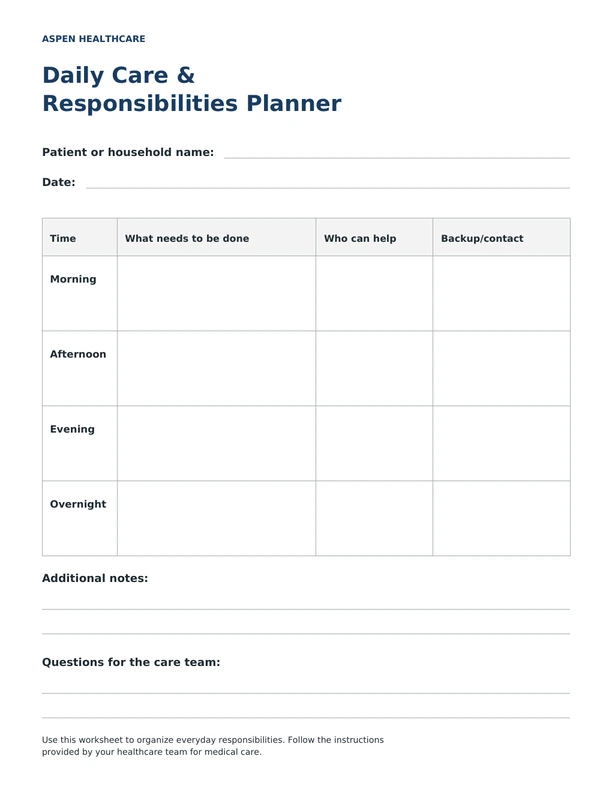
A simple way to organize everyday responsibilities and identify who is available to help throughout the day.
Download the Daily Care Planner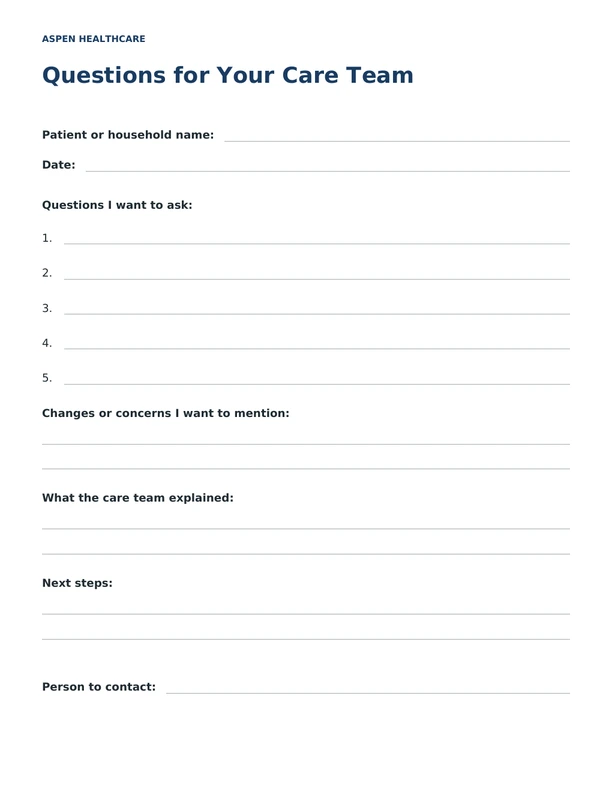 View full worksheet
Keep track of questions, concerns, and information you want to discuss during visits or conversations with your care team.
Download the Care Team Questions Sheet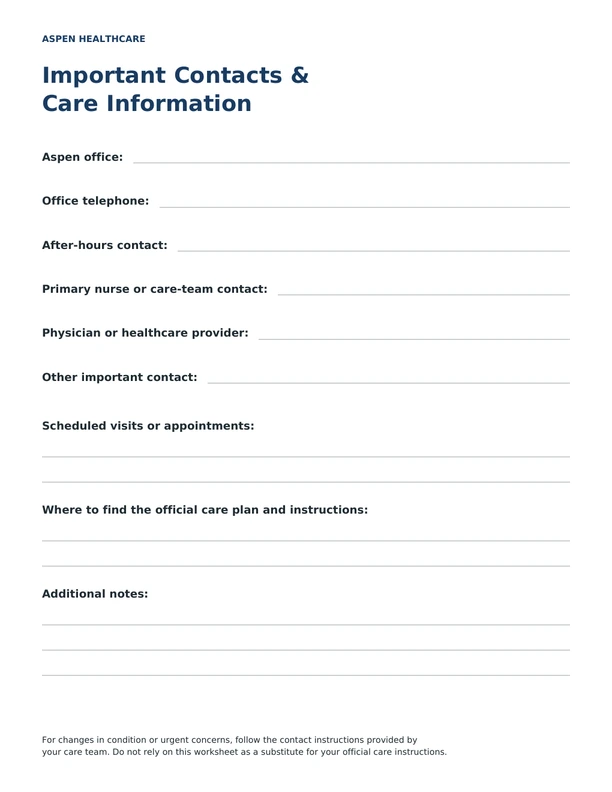 View full worksheet
Keep important contact information and basic care arrangements together so they're easier to find when needed.
Download the Care Contacts SheetSTAYING CONNECTED
Health needs and daily routines can change. When something feels different, it's important to know who to contact and how to explain your concerns.
Your Aspen care team can help you understand what changes should be reported, what information may be helpful, and how to follow the instructions in your care plan.
Pay attention to new symptoms, changes in comfort or mobility, difficulties with care routines, or anything that concerns you.
Use the contact instructions provided by your care team. Hospice patients should use their hospice's 24-hour contact information for concerns that arise outside scheduled visits.
Ask whether a visit, additional assessment, updated instructions, or another form of follow-up is needed.
SUPPORT FOR THE PEOPLE DOING THE CARING
Supporting someone through illness can bring unfamiliar responsibilities, difficult decisions, and emotions that change from day to day.
There may be times when you feel confident about what needs to happen and others when you have questions or concerns.
It's appropriate to ask for help, talk openly with your care team, and involve the people you trust.
HOME HEALTH
When someone is recovering from illness or managing ongoing health needs, family members may need help understanding care routines, rehabilitation goals, and changes in independence.
Aspen's home health professionals can provide appropriate patient and caregiver education, explain the care plan, and help families understand how to support the person receiving care.
Explore Home HealthHOSPICE
Hospice provides additional emotional, social, spiritual, and bereavement support for patients and families facing terminal illness.
Social workers, chaplains, and other members of the hospice team can help families talk through concerns, understand what to expect, and find support that reflects their needs and beliefs.
Hospice bereavement services also support families following the death of someone they love, according to the needs identified in the bereavement plan of care.
Explore HospiceYou can ask for support, too.
HELPFUL RESOURCES
Some questions and needs extend beyond the care Aspen provides. These trusted organizations offer practical assistance, information, and support for patients, families, and caregivers.
These resources connect families with practical assistance beyond scheduled healthcare visits.
A federal resource connecting older adults and families with local services such as meals, transportation, caregiver support, and assistance at home.
Find free or low-cost community services throughout Idaho, including food assistance, housing, transportation resources, and other support.
Search for local assistance and community programs throughout Utah, including food, housing, financial support, and other services.
Find community assistance programs throughout Texas, including transportation, food, utility assistance, housing, and other resources.
Practical information and tools for organizing care and making important decisions.
Free printable worksheets for organizing caregiving responsibilities, improving home safety, and evaluating outside care providers.
Evidence-based information and practical resources for family members caring for older adults.
Free state-specific advance directive forms and instructions for documenting healthcare preferences and choosing someone to make decisions when needed.
Independent information and assistance with healthcare benefits.
Free, individualized Medicare counseling to help patients and families understand coverage, insurance choices, and benefits.
Information, education, and support programs for eligible veterans and the family members who care for them.
Additional information and support for families navigating serious illness, hospice care, and bereavement.
Detailed guidance on physical comfort, emotional needs, practical support, and caring for someone approaching the end of life.
Resources for children, teenagers, and families navigating grief and loss, including guidance for adults supporting grieving children.
Search for local or online grief-support groups. GriefShare is a Christian-based, faith-based option.
These independent organizations provide additional information and community resources. Availability and eligibility may vary. For questions about your current care, please contact your local Aspen team.
Whether you're looking for practical guidance or have questions about supporting someone receiving care, your local Aspen team can help you understand the resources and next steps available.
Find Your Local Aspen Team